

Dear Friends and Family of Regen,
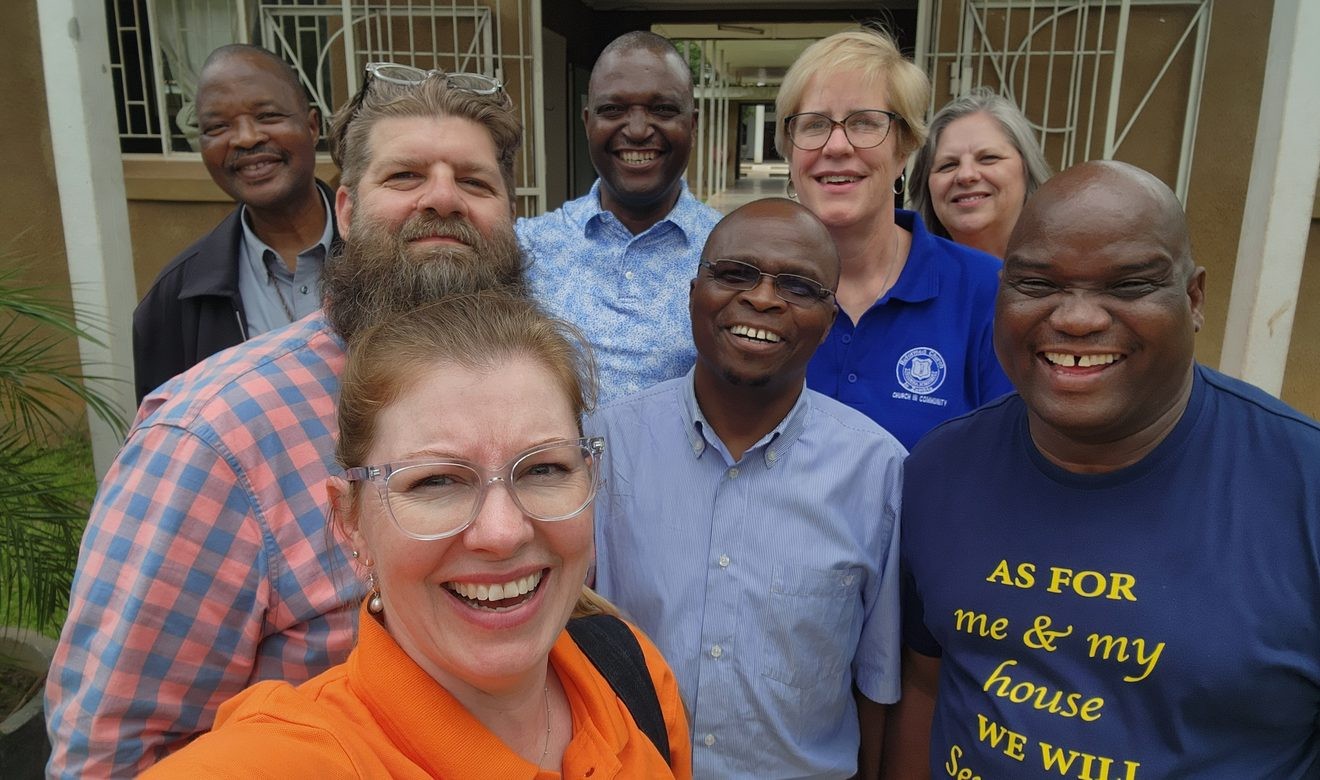
I (Malissa) have recently returned home from a field visit to Zambia and Lesotho. Now that the chaos and jet lag have settled, I will attempt to relive my journey.
Zambia
As many of you know, most years I travel to Zambia with my church – The River Community Church. Usually, I travel with a small group (up to 3 others) of new and returning travellers on a pilgrimage to visit our friends and partners. Our church partnership has been in existence since 2007, so I am quite familiar with the terrain and rhythm of these trips. Through the years of witnessing many beautiful changes in the country, it became obvious that to ensure better sustainability, we should begin funding the education of targeted leaders, supporting programs that have been proven to work well. It is at this point that ReGen was brought into Zambia.
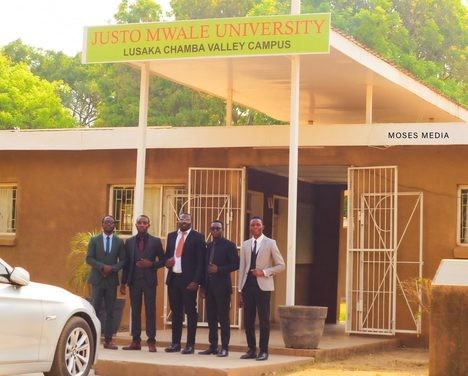
Starting in 2023, ReGen relaunched our African Leaders program (previously we supported students in DR Congo) with the goal of providing a minimum of 5 scholarships to students at Justo Mwale University in Lusaka. We chose Justo Mwale because of my personal knowledge of the staff and institution, but also because they are the university teaching the Church in Community course to its students.
This course is the roots of change in Zambia, teaching students’ community development principles, entrepreneurship, mentoring and agricultural business. When these new pastors are assigned – typically in remote areas of Zambia – they can guide the communities in income generation, agricultural sustainability and other necessary skills to thrive. This is a groundbreaking, grassroots model to deliver good practices throughout the country. The students also learn the practical importance of gender equality, food and nutrition, youth running clubs, village savings and loans and advocacy. This means that Zambian people are leading the changes in their country using their local knowledge and skills and educating their own community members.
Each of these scholarships is about $4,000 USD a year, and it provides the students with living accommodations, books, and tuition. This is a great investment in the future!
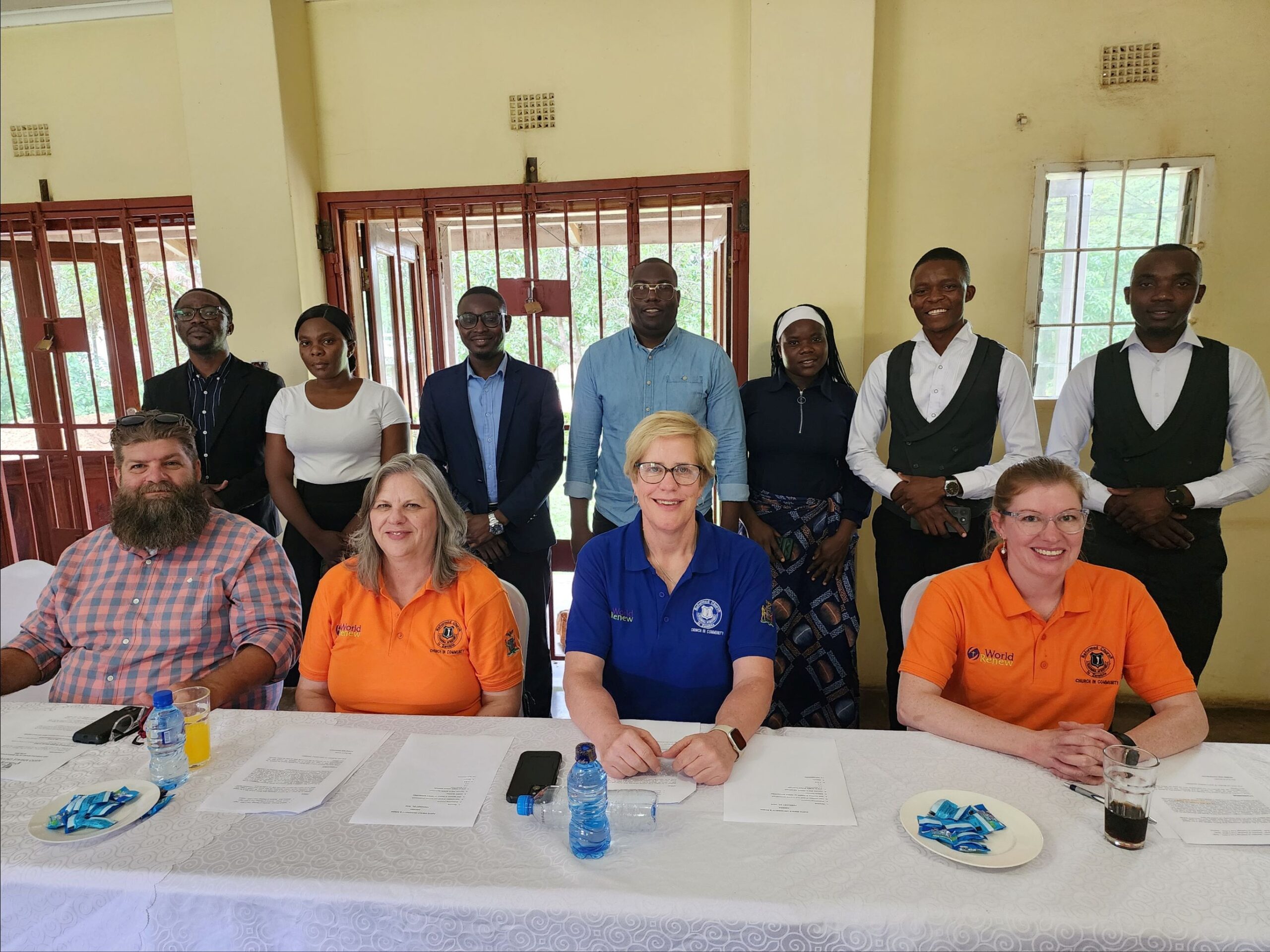
During my time I was able to visit the seminary, meet the leadership of the University as well as the scholarship recipients. We reviewed our agreement, ate a ‘light’ lunch together and happily agreed to stay the course in this partnership. It is always a good day when we can celebrate positive change in the world!

Lesotho
Once my time in Zambia wrapped up, I continued alone to Lesotho. It has been years that I have been trying to visit our programs there, but schedules have never lined up between my visits to Zambia and Naomi’s visits to Lesotho. In 2026, the stars aligned!
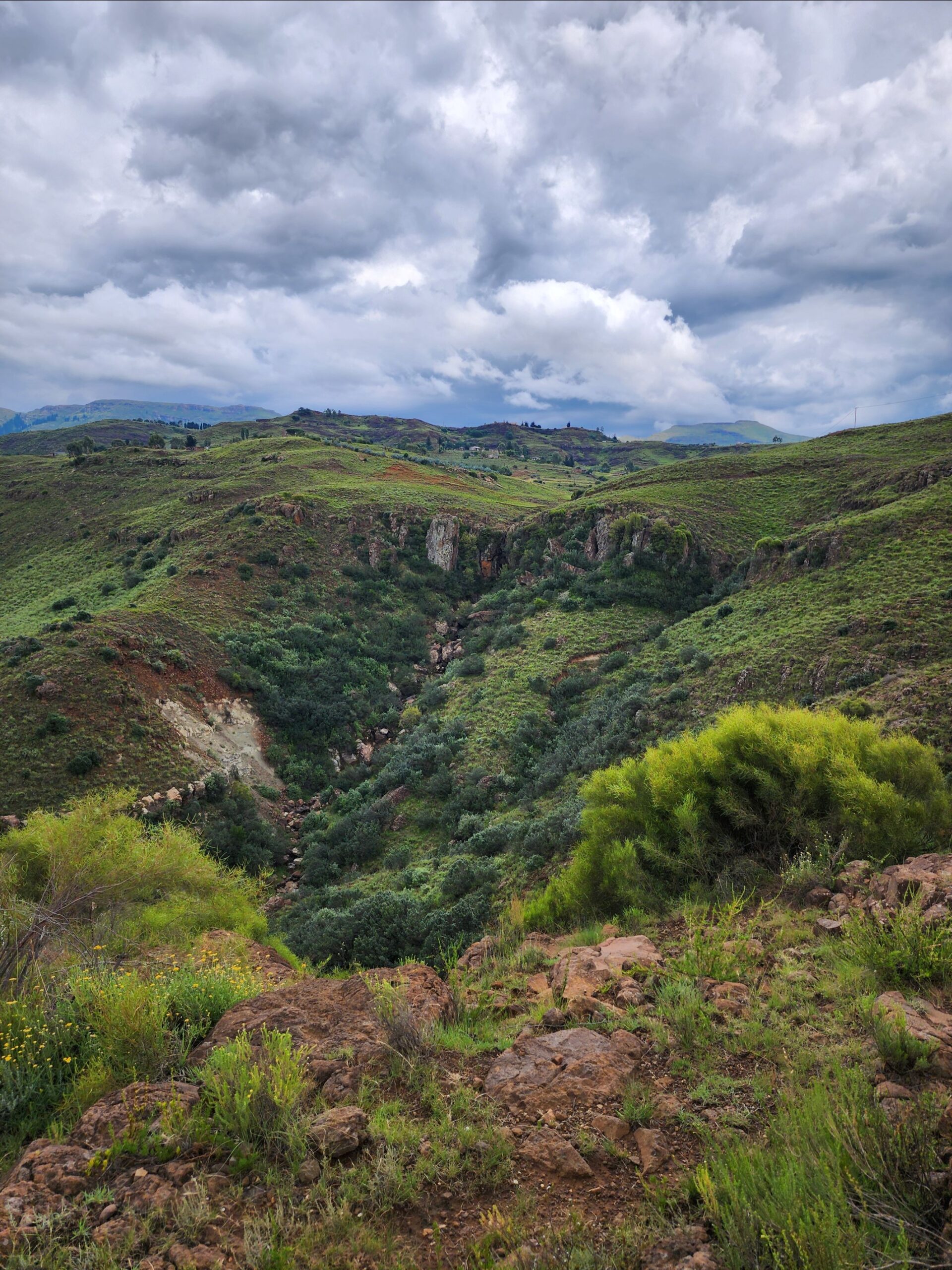
Naomi graciously picked me up in South Africa and we drove into Lesotho. I was immediately struck by the landscape and differences in agriculture from our programs in Zambia. It is so fun to go somewhere new and provide witness. The proliferation of sheep and shepherds felt biblical.
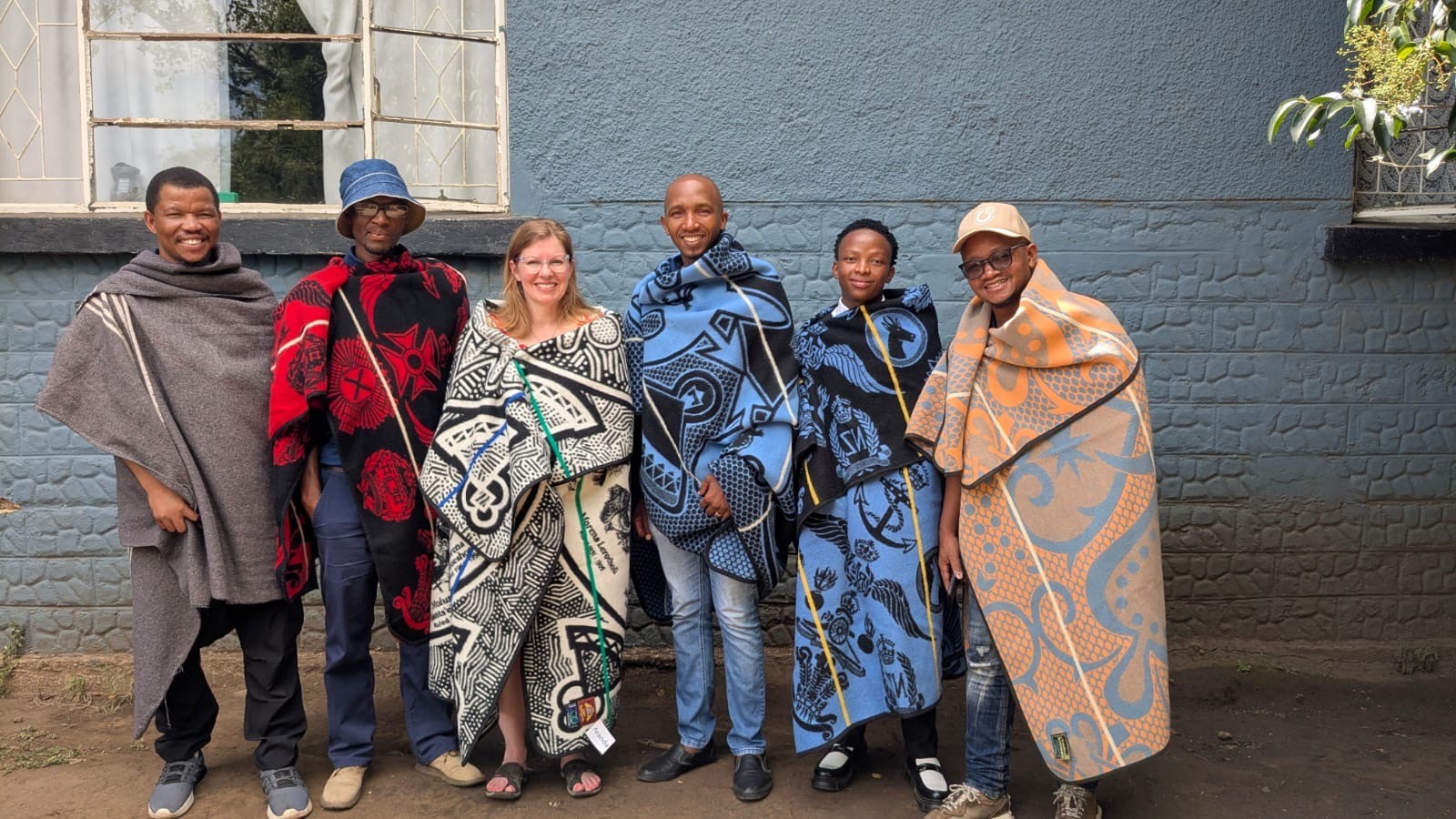
For dinner, I met with all the senior leadership from Trust for Africa, and we shared what brought each of us to this place together. I was inspired by each leader’s story of their calling to social work, to TFA specifically, of wanting to make a difference in their beloved country. I felt moved by their gentle hearts and caring souls.
Spending a day at Trust for Africa seeing the feeding program and after school programs was at times overwhelming, but only because of the volume of children that show up and the quick increase in activity that creates. Their food was cooked in the largest pots I have ever seen, which were scraped clean by the time everyone had their fill. Many children come with empty containers to take food home for their siblings. Not one morsel was wasted. It was the first time I have ever eaten hominy, which was delicious and a fun difference from Zambia’s nsima.
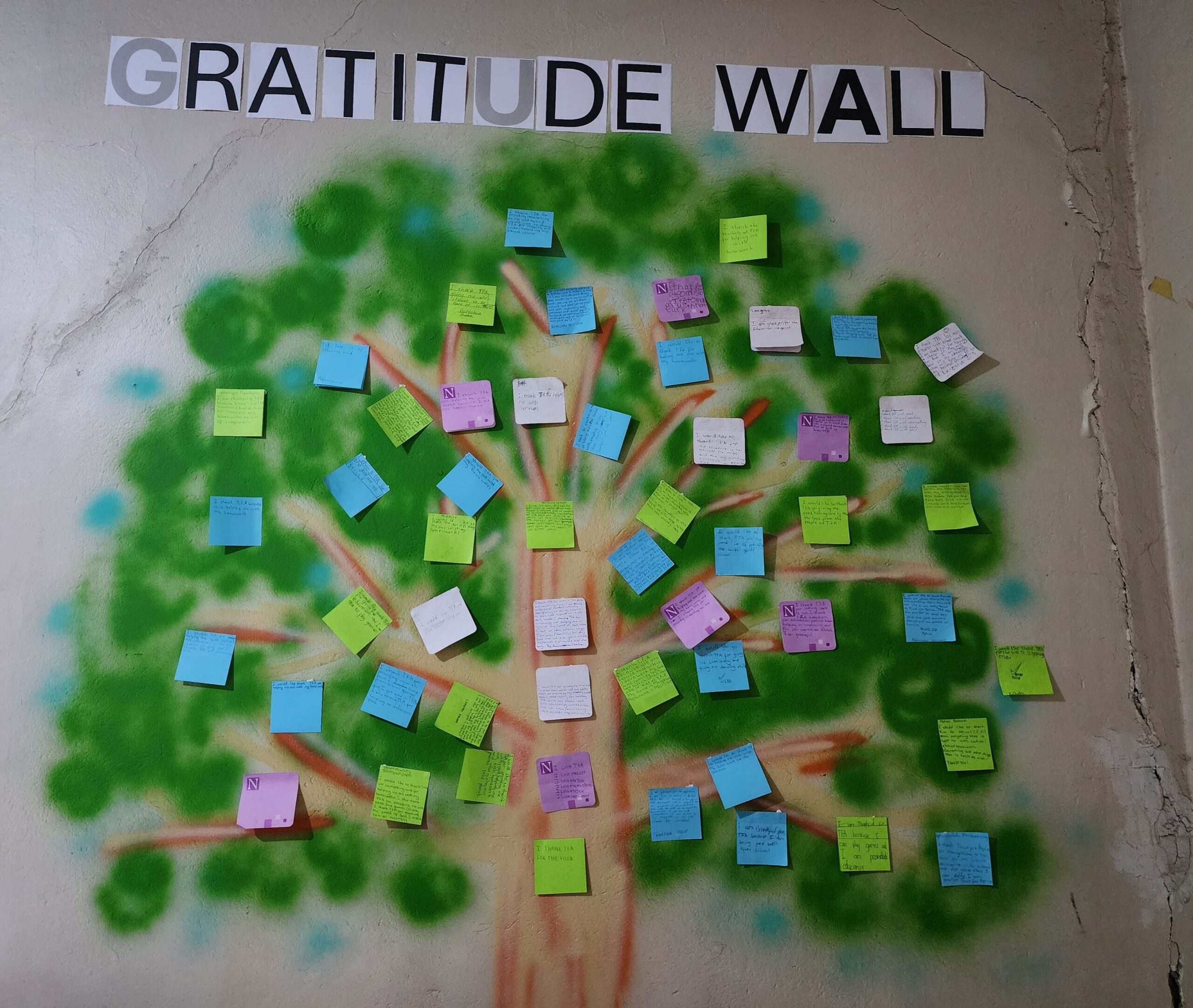
The heart of the staff shines through their counselling and mentorship.Children are feeling valued, seen and safe. The children are aware of and excited about future possibilities because of what they experience at TFA. The gratitude wall was particularly touching. The children are encouraged to consider gratitude and write on a post-it note what they most appreciate. There were many notes that said, “I am grateful for the food we are given”and others that said, “I am grateful I feel safe” or “I am grateful I get to read stories.” The breadth and depth from the children themselves was impactful to me, but also to the staff. They confessed that some days are hard, and they don’t feel like they are making a difference in the lives of the children. The beauty of the wall of gratitude gives the staff a place to reflect and re-center as well.
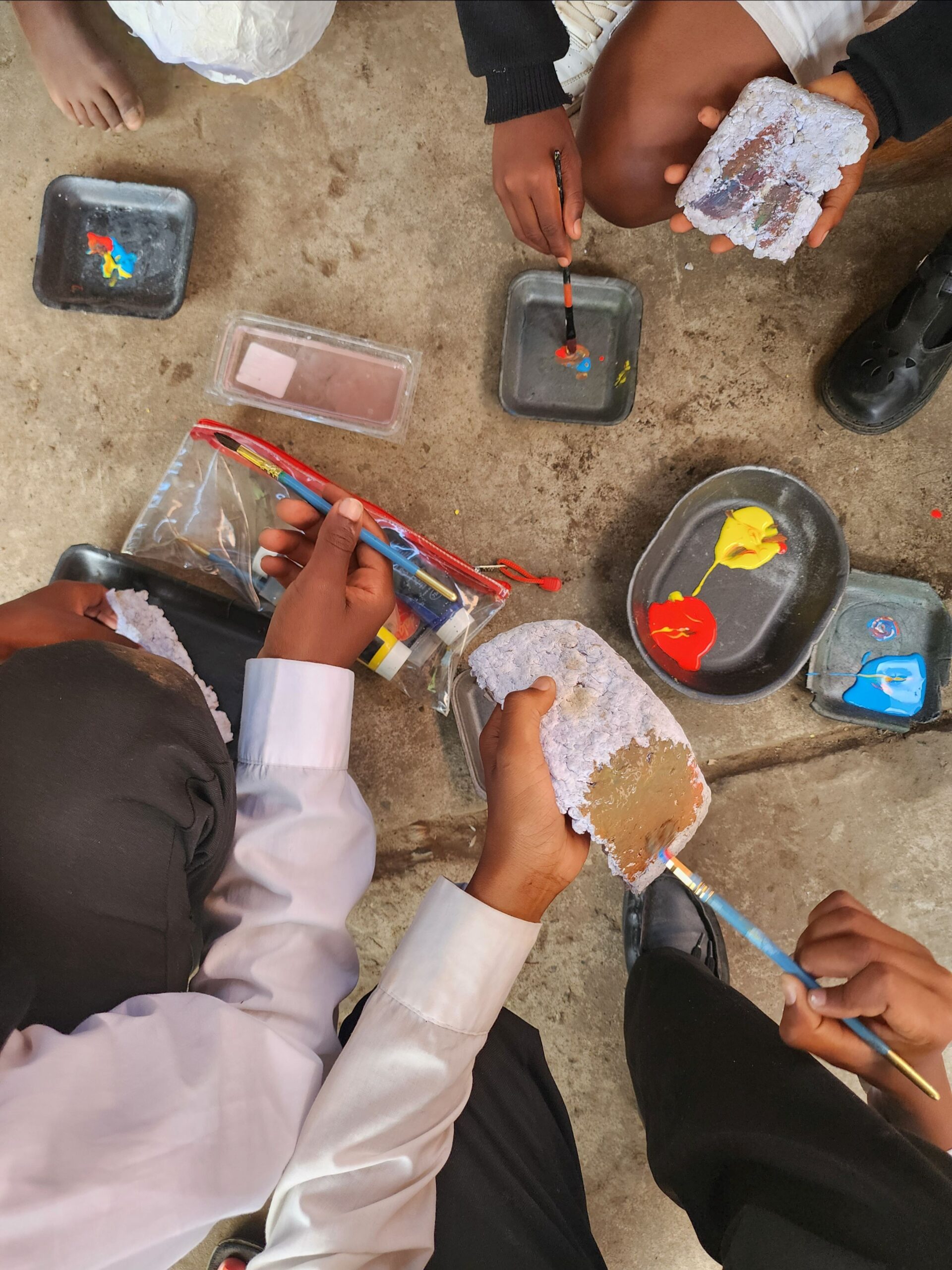
The personalities and passion of the staff allow for a variety of clubs to exist: STEM, dance, art therapy, book club and knitting/crocheting. At a set time the kids all break into their respective clubs (not limited by space or numbers, they each choose freely where they want to go). I spent my time with the art therapy group because I was in awe of the heart of the staff member who is implementing it. He is a gentle soul who cares deeply and wants to help heal his land through the healing of the children. He is learning art therapy online to bring this form of counselling to TFA. When I was there, the art club was experimenting with paper mache: making their own glue with flour and water, using found objects and molds, and painting them once they were dry. They also showed me past drawing projects that focused on Basotho cultural items and kings. The students in this group were quiet, studious, and engaged in their work.
I was also able to visit a family support group that is learning trauma informed care-based strategies for family reunification. The coursework they use was developed for an African context. Instead of being imported from North America, the trainings translate properly into a local experience, which sees greater buy in from the participants. Trust for Africa delivers this so well that they are called upon by many other organizations to provide training and guidance on this methodology. They work with law enforcement and government to provide the training with the aim to limit the amount of re-traumatization that happens when children are brought into the system. The private testimonies given in the group by parents lead me to believe they will help to shape a better future for the Basotho.
I am so appreciative of each of you, as you allow this excellent work to continue through your generous support. In both countries, foundational change is underway that will help ensure a bright future for many!
Malissa XX
Help us spread the word by sharing our social media posts ~ Thank you!

Leave A Comment